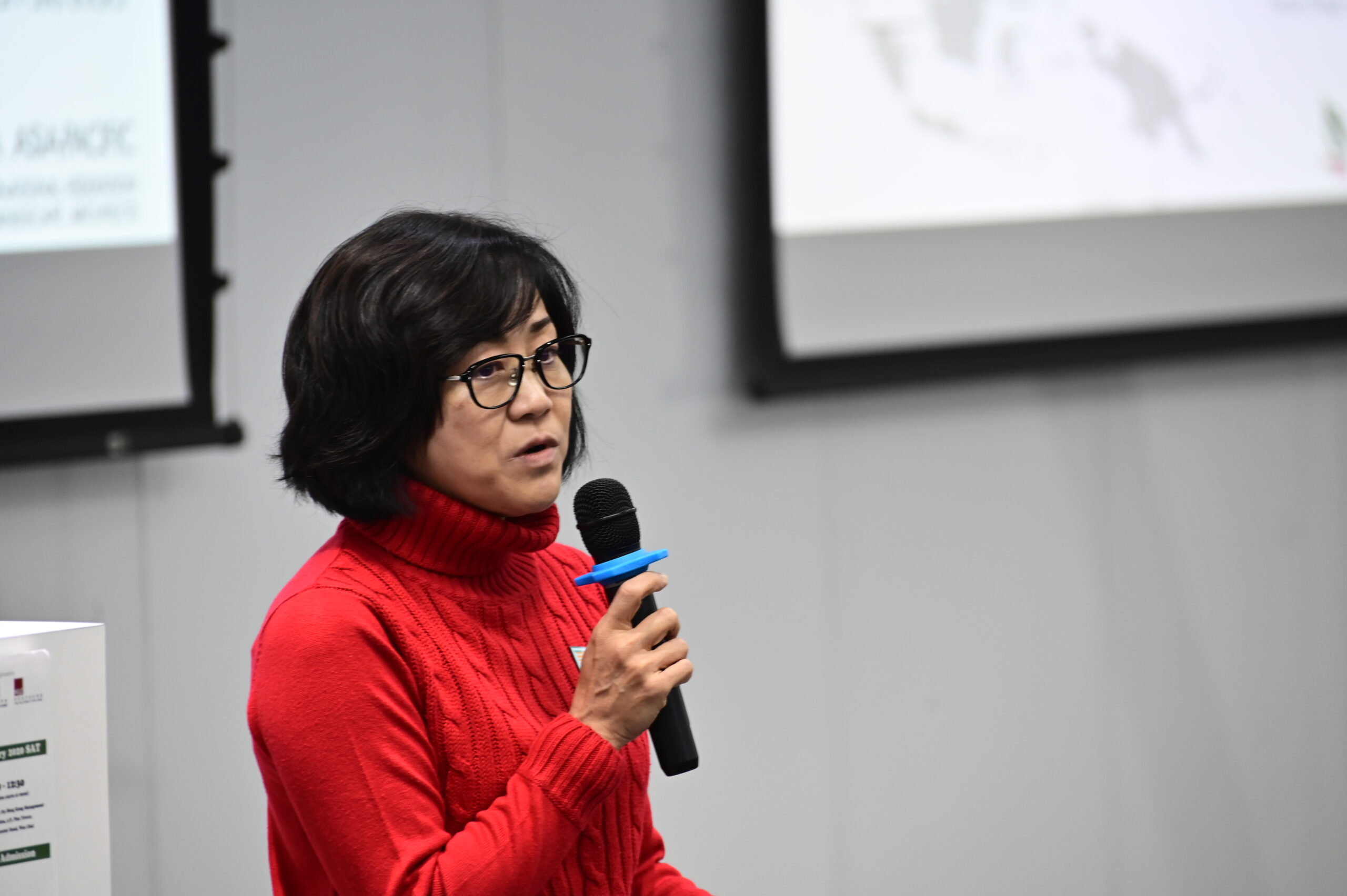
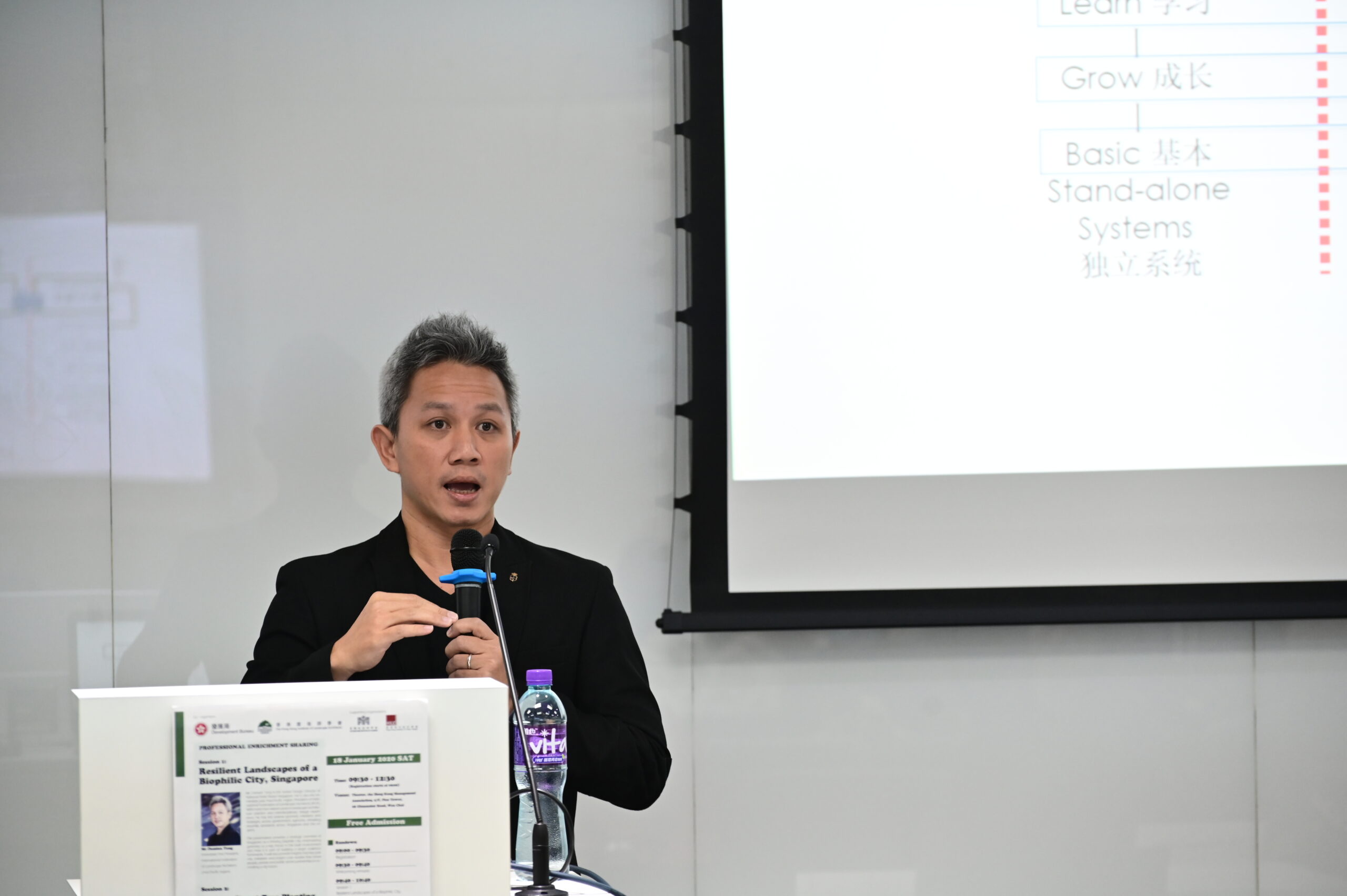
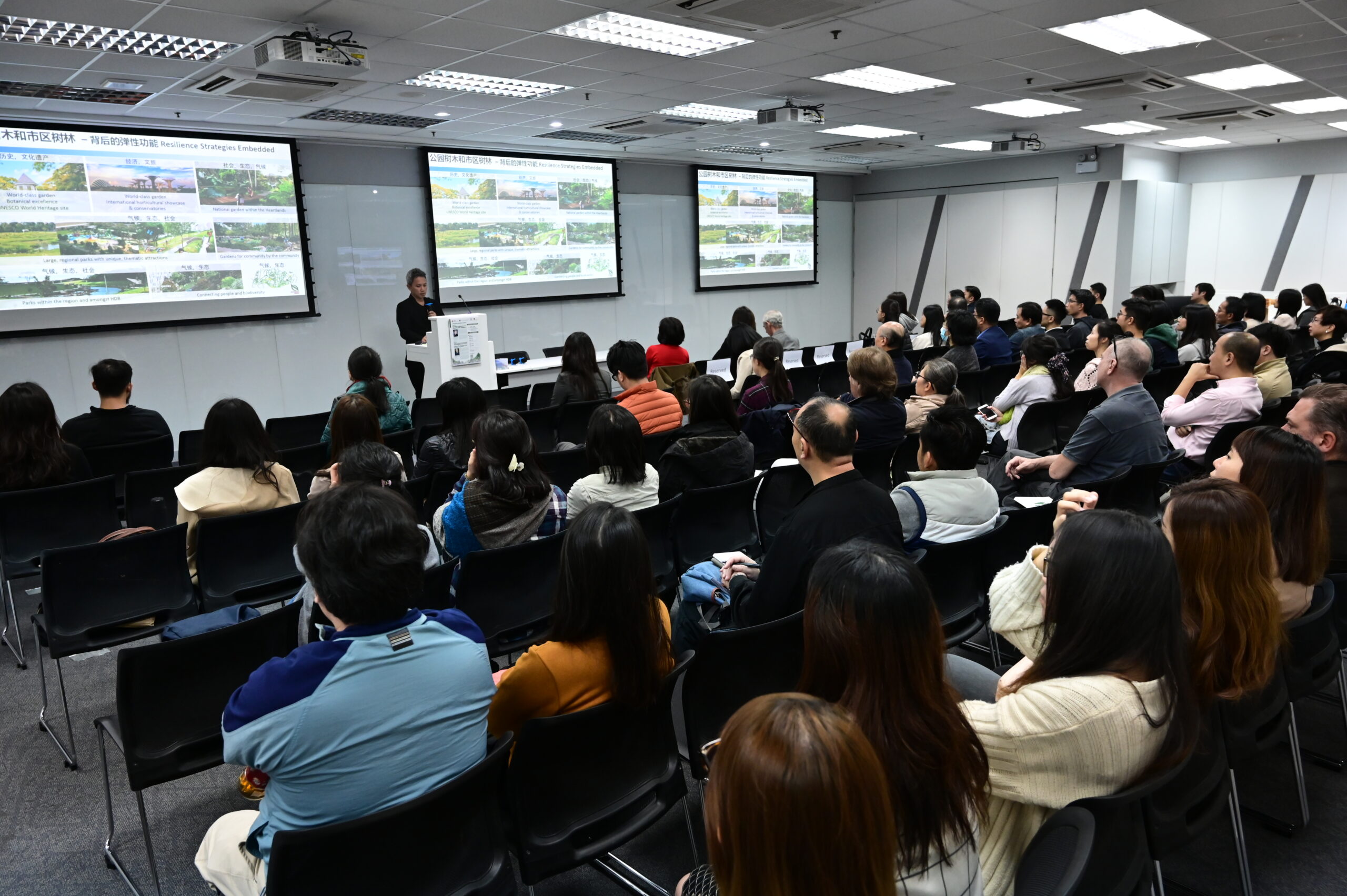
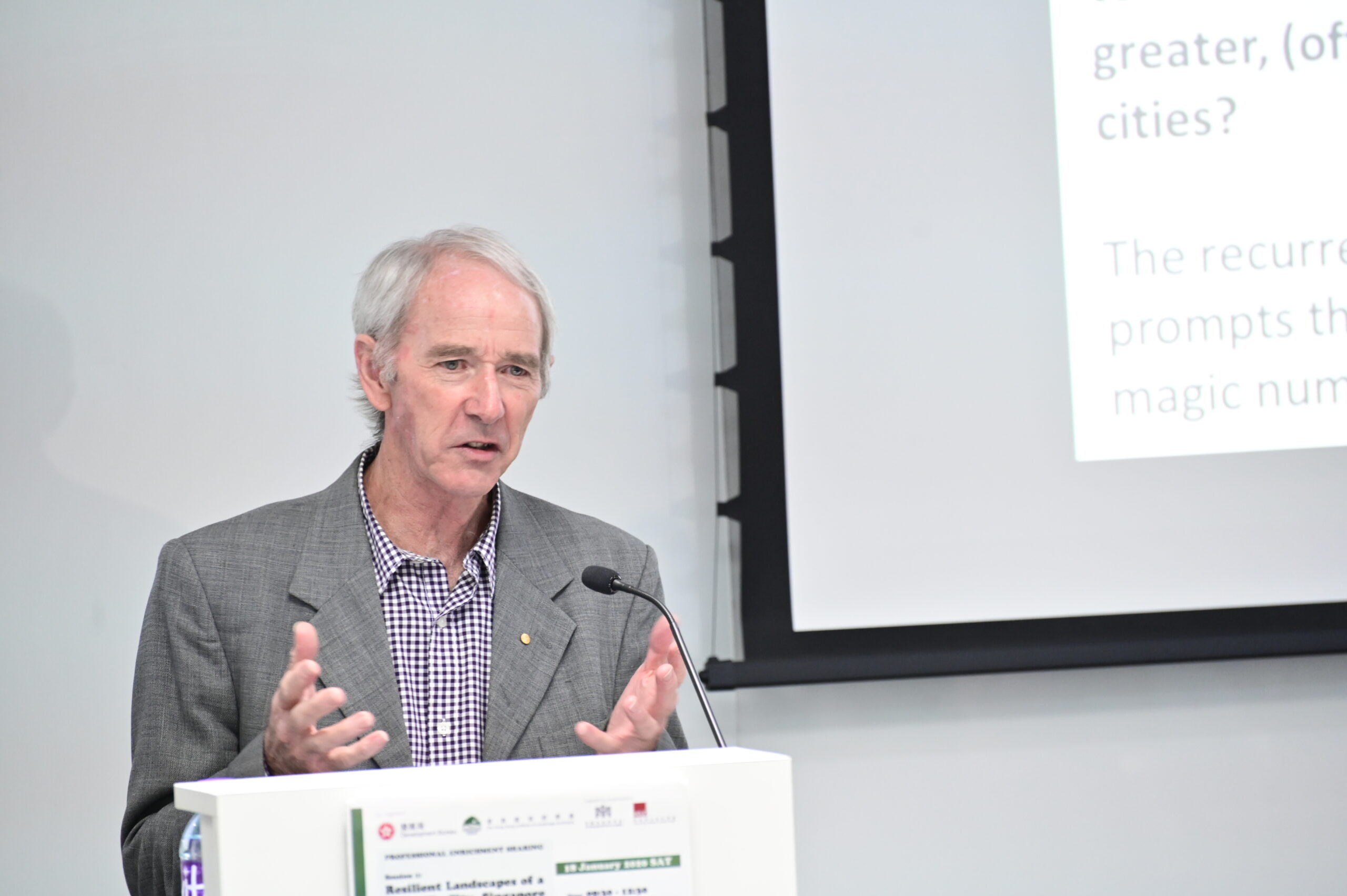
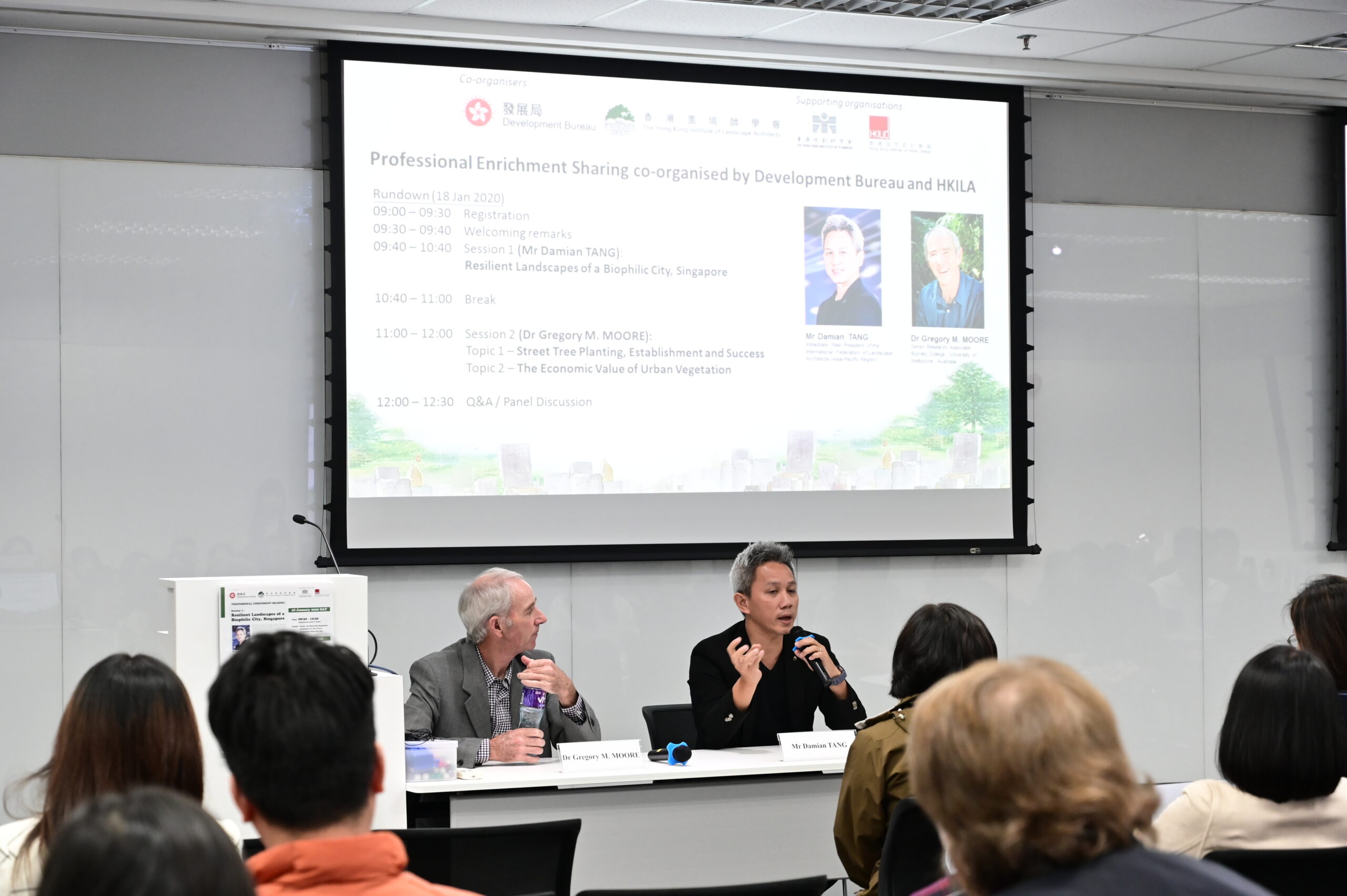
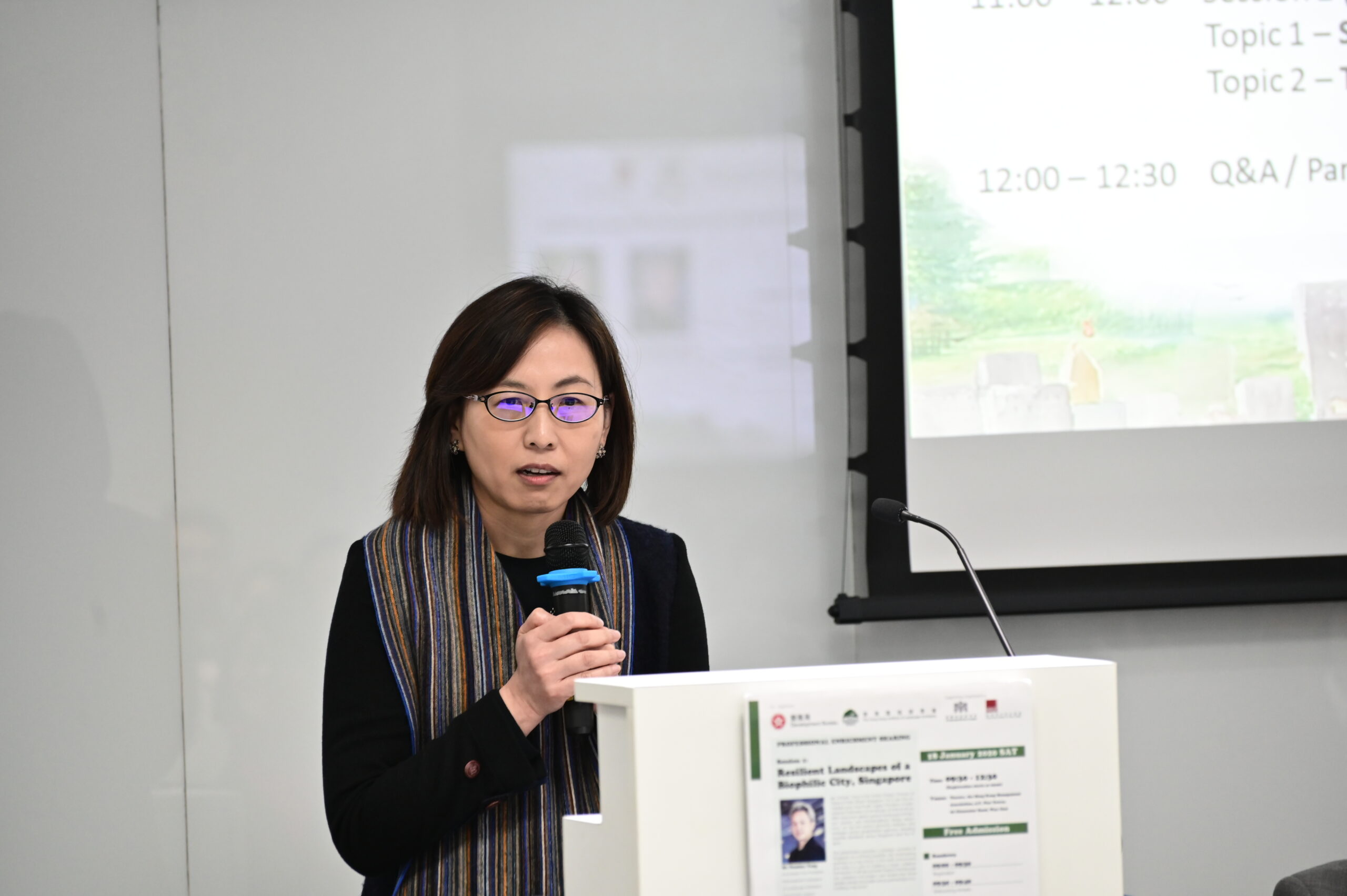
Professional Enrichment Sharing Session was co-hosted by Development Bureau and HKILA on 18 January (Sat) morning. We are very honored to have two guests Mr. Damian Tang from Singapore and Dr. Gregory Moore from Australia to share with us their insights on resilient landscapes, biophilic city, tree management and economic value of urban vegetation.
Mr. Damian Tang gave us an overview of Singapore’s government policies and programmes which provided incentives to integrate greenery in developments in such a dense city. He emphasised on how future city should be a fully integrated system – a biophilic city seeking for nature-based solutions. Facing global issues of flooding, storm and sea level rising, Singapore took a strategic move to adopt a biophilic city approach in a comprehensive manner with 14 biophilic design principles in areas ranging from city planning, ecological planning, blue-green infrastructure, to public education and playground design. Damian shared with us in details some projects he did on waterbodies and waterways rejuvenation, giving us a glimpse on the role of landscapes within a larger resilience framework.
Dr. Gregory Moore shared with us 2 topics. The first topic was on street tree planting and establishment; the second topic was an in-depth investigation on economic values of trees. Dr. Moore highlighted the importance of definition of “Establishment” and the way to scientifically test the establishment of a tree. He also shared with us technical aspects on adaptive management and maintenance of street trees and highlighted a few keys to success – good quality stock, good root zone, formative pruning, mulching, tree inspection and so on.
Dr Moore then moved on to discuss the value of trees beyond aesthetics by quantifying economic benefits the society can get from planting trees. He used diverse types of money saving examples, from health care costs, electricity bills, carbon costs, to municipal expenditures on repaving worn out bituminous surface due to long exposure to sunlight where there is no tree shade. By scientifically qualifying the benefits in terms of money, we could really see the gross benefit in tables and figures, giving us a fresh perspective on landscape and tree planting.